The Agriculture Loophole
Closing the Agriculture Loophole: Securing Protections for Farm Working Children
I. The Faces of Children Behind the Data
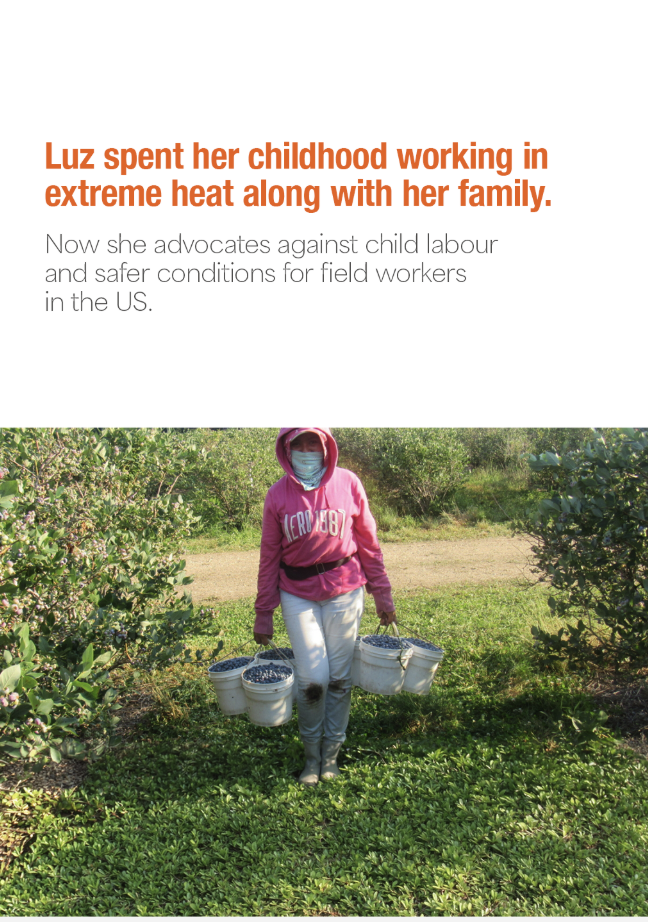
Luz grew up picking produce in both Michigan and her home state of Florida, beginning agricultural work at only 14. She describes the extreme conditions through which she had to continue to work: "Covering most of my face, the bandana made it hard for me to breathe in extreme heat; at times, I felt my body, head and eyes just shutting off." Luz is not the only child facing these conditions. [1] Her experience raises a larger question: how many children face similar risks without appearing in official statistics? Although the United States collects federal statistics on youth employment and documented child labor violations, significant gaps remain in its ability to comprehensively measure the nationwide prevalence of illegal and hazardous child labor.
Existing enforcement data reflect violations identified through investigations rather than a structural understanding of the issue. These limitations are particularly concerning in agriculture, where discontinued data collection programs make it difficult to assess how many children are exposed to hazardous working conditions. According to the Government Accountability Office (GAO), one Department of Labor (DOL) survey and two other federal datasets containing child injury data ended between 2015 and 2023. Consequently, the actual prevalence of child labor in the United States remains insufficiently documented. [2]
Taking that into account, GAO estimates that 2.8 million children worked in the United States in 2023, while earlier estimates suggest that between 300,000 and 500,000 children and youth work in agriculture alone. These two figures come from different sources and are not a share of one another, but statistics like this call attention to the lack of protections for vulnerable populations, such as immigrants and people living in poverty, who may be more likely to be subjected to work in hazardous conditions. What remains unknown is how many children are working in hazardous jobs. [2] [3]
Data is essential to understanding child labor and informing legislative decisions. But gaps in the evidence cannot become an excuse for inaction. The United States has opportunities both to strengthen protections for children working in agriculture and to improve enforcement of child labor laws more broadly. These are the complementary purposes of the CARE Act and the Stop Child Labor Act.
II. The CARE Act: Closing Gaps in Agricultural Protections
Against this backdrop, we welcomed the news that Senator Ben Ray Luján of New Mexico reintroduced the Children's Act for Responsible Employment and Farm Safety (CARE) Act of 2026, to amend the Fair Labor Standards Act of 1938. His office refers to the bill as the Children's Act for Responsible Employment in Agriculture. In announcing it, Senator Luján recognized the many children who work on farms across the country under hazardous conditions. The bill's findings also note that the marginalized status of those working in agriculture plays a large part in why their needs go unmet, and why accurate data is so hard to collect. [4] [5]
"For farmworkers, many of whom are immigrants, all of whom are poor, and some of whom are undocumented, it is challenging to capture accurate data that reflects both the percentage of children working in one of the Nation's most dangerous occupations, as well as the scope of the work that they are engaged in." (Findings, S. 5662) [4]
The intention behind the CARE Act is to "improve child worker safety by adjusting the age and work hour standards for children in agriculture to the standards for children working in all other industries." The bill's findings add that child farmworkers suffer work-related fatalities at more than four times the rate of other young workers. Notably, the CARE Act repeals the waiver provisions for hand harvest laborers and strengthens protections against pesticide and chemical exposure. The proposal addresses gaps in agricultural protections through changes to eligibility, hazardous work rules, enforcement, and reporting. [4] [5]
The bill's ten sections range from raising the base age for farm work from 12 to 14 and the minimum age for hazardous farm work from 16 to 18, to increasing civil and criminal penalties, to requiring DOL to analyze and report to Congress each year on work-related injuries, illnesses, and deaths among children in agriculture. Notably, the bill would bar children under 18 from working as pesticide handlers, subject to the bill’s stated exception for children working on their parents’ farm. [4] [5]
III. The Agriculture Loophole and Hazardous Work
For broader context, it is important to note that the Fair Labor Standards Act defines oppressive child labor primarily by reference to minimum employment ages and occupations designated as hazardous. However, statutory exemptions, particularly those applicable to agricultural employment, limit the scope of federal protections. This is what we call the "agriculture loophole." Agriculture is the only industry in which children as young as 12 may work with virtually no limit on hours outside of school. As a result, certain forms of agricultural work performed by children may be legally permissible under federal law despite the dangers they pose to children's health, safety, education, and development. [5]
The proposed amendments call for particular attention to the hazards of pesticide handling and the effects it can have on the health of workers, most notably children. Section 9 states that employing children under 18 as pesticide handlers is "particularly hazardous for, and detrimental to the health and well-being of, such children." The bill requires the Secretary of Labor to revise part 570 of title 29 of the Code of Federal Regulations within 30 days of enactment "to prohibit the employment of a child under the age of 18 to perform any of the tasks or duties described in the definition of the term 'handler'" in the Environmental Protection Agency's worker protection standard (40 CFR 170.3). Those tasks include mixing, loading, transferring, or applying pesticides, and disposing of pesticides or their containers. [4]
Farmworker families face serious health risks from pesticide exposure, and children are especially vulnerable. The provisions in the 2026 CARE Act on pesticide exposure are integral to protecting child workers and ensuring that they can exercise their right to health.
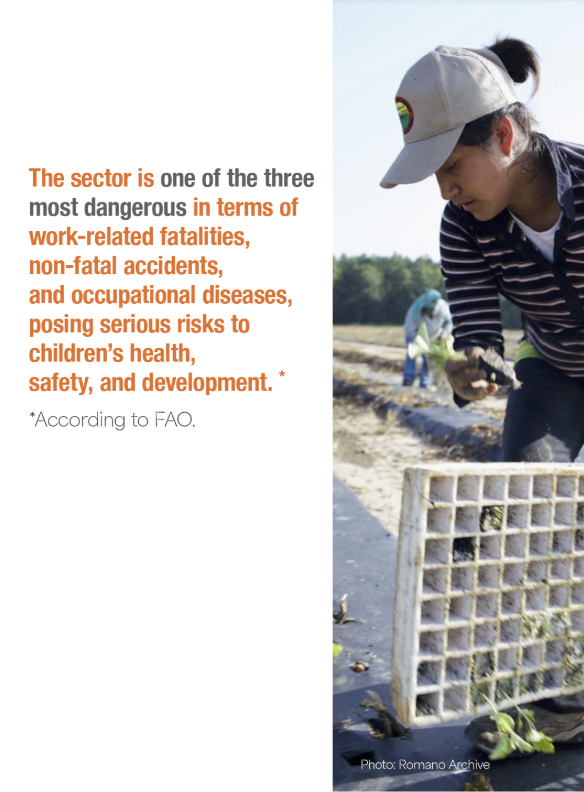
Pesticide exposure is not the only danger children face while performing labor on farms in the United States. In her essay, Luz writes about the extreme heat she worked through, and about picking crops all over Michigan and Florida. [1] Similar stories are told by other children. Jacqueline Aguilar, for example, began working in lettuce fields in Colorado at only 11. In her essay, Child Labor Personal Experience: Growing Up in the Fields, she describes work that "consisted of tired feet walking down the field with my blistered hands holding a bulky hoe." Her shifts began around 5:00 AM. Her father, who migrated to the United States at 19 and worked in the fields ever since, was later diagnosed with lung cancer, which she says could have been caused by the fertilizer, dust, and pesticides he breathed in the fields. [6]
The similarities between Luz's and Jacqueline's stories are not a coincidence. They reflect the conditions many children and families who work in agriculture face in the United States. These are just two stories among thousands, each unique but echoing the others. For children growing up in circumstances like the ones Luz and Jacqueline experienced, protections like those in the CARE Act could make the difference between harm and safety, reducing the likelihood of long-term health effects from prolonged exposure to pesticides and other dangerous working conditions. It is through measures like these that families like Luz's, and hundreds of thousands of others, could be protected from hazardous jobs. [1] The bill’s reintroduction keeps attention on the children left vulnerable by exemptions in federal law. Senator Luján’s advocacy also reflects the sustained efforts of farmworkers, young people, community organizations, and child labor advocates who have long called for stronger protections in the United States and beyond.
In the United States, proposals to weaken protections at the state level make coordinated action especially important. According to the Economic Policy Institute (EPI), in 2026 at least 13 states have introduced bills weakening child labor protections and four have enacted them (EPI's table of bills also marks West Virginia's as enacted), while only three states introduced bills to strengthen them, down from 15 in 2025. Oregon enacted a law locking current federal work-hour standards into state law. State and federal officials alike have pursued changes that weaken child labor laws. [8]
The weakening bills include lowering minimum wages for teenage workers, using youth apprenticeship programs to loosen labor protections, eliminating work permit requirements for minors, and reducing safeguards for teenagers working in childcare. Among the states that enacted such changes, EPI points to Indiana, which eliminated its youth employment documentation system so that state agencies will have no record of teen employment; Nebraska, which created a subminimum wage for 14- and 15-year-olds; Washington, which extended hour limits for minors in work-based learning programs; and West Virginia, which removed its list of prohibited hazardous occupations. Virginia's bill was amended to remove the provision that would have weakened hazardous-work protections. Most of these changes do not target farm work, but they erode the framework that protects all working minors and make violations harder to document, which matters because children in agriculture are already among the hardest to count. [8]
Alongside the agriculture-specific reforms proposed in the CARE Act, Senators Brian Schatz and Todd Young reintroduced the bipartisan Stop Child Labor Act to strengthen federal enforcement across sectors. The proposal would raise civil penalties for employers who break child labor laws to between $5,000 and $132,270 for routine violations and between $25,000 and $601,150 for each violation that causes a minor's death or serious injury.
It would also create criminal penalties for repeat or willful violations, with fines of up to $50,000 and up to a year in jail, and let children harmed by violations seek compensation. Alongside enforcement, it’s worth highlighting that the Stop Child Labor Act proposes a grant program to help employers recognize, avoid, and prevent violations before they happen, and it would permanently establish a National Advisory Committee on Child Labor.
VI. What the Numbers Reveal & A Call to Protect Every Child
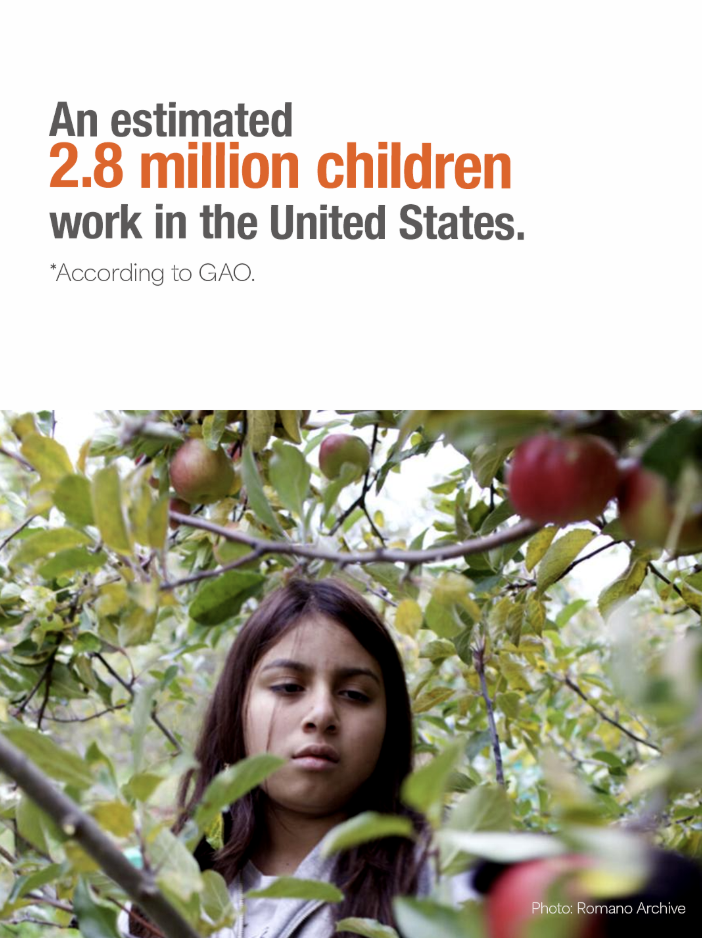
The two proposals address different but connected needs: the CARE Act would narrow agricultural exemptions and add protections for child farmworkers, while the Stop Child Labor Act would strengthen penalties, prevention, and accountability across industries. Yet neither stronger rules nor tougher penalties can fully succeed if violations remain invisible. Despite the popular belief that child labor is either a thing of the past or something that happens "somewhere else," GAO estimates that 2.8 million children worked in the United States in 2023. What is still unknown is how many children are working in hazardous jobs. Earlier estimates put the number of children and youth working in agriculture alone between 300,000 and 500,000, but there is no current national estimate, and federal data on work-related injuries and deaths among minors is limited and incomplete. The best available indicator is enforcement data. [2] [3] [9]
In 2025, the DOL investigated 976 cases with child labor violations affecting 5,272 children, the most cases since the Great Recession, and 773 of those children were employed in violation of hazardous occupation standards. These figures are valuable, but because they come from completed investigations, they should be treated as a documented minimum, not a national total. Higher counts do not, by themselves, prove that illegal child labor has become more prevalent; they also reflect enforcement activity. [10] Accurate documentation is especially difficult when fear of retaliation from employers, economic insecurity, precarious immigration status, language barriers, and other overlapping circumstances of vulnerability can discourage farmworkers and their families from reporting labor abuses.
These barriers are particularly concerning when children are involved and given these circumstances, it is reasonable to conclude that the actual number of children working in violation of labor protections is likely higher than the number identified through official investigations, although the extent of underreporting remains difficult to determine. Without consistent data collection, independent oversight, and accessible reporting mechanisms that protect workers and their families from retaliation, establishing the true scale of the problem will remain an enormous challenge that needs to be properly addressed as we cannot adequately protect children whose circumstances remain invisible to the institutions responsible for safeguarding their rights.
Moving forward
A meaningful first step, alongside the legislative proposals, would be to establish a centralized institutional mechanism responsible for systematically collecting, monitoring, and reporting data on child labor across the United States. Such a mechanism would help address existing information gaps, improve coordination among enforcement agencies, and provide a more comprehensive understanding of the prevalence of child labor, particularly in high-risk sectors such as agriculture. Some of the advances can be overseen by independent actors and the reporting mechanisms can be of great use as it keeps accountability on the obligations and promises all nations made.
The need to protect children living in circumstances like those Luz and Jaqueline experienced is urgent. Their safety should not depend on whether an employer is investigated, whether a family feels safe reporting abuse, or whether an agricultural exemption leaves dangerous work legally permissible. The CARE Act and the Stop Child Labor Act offer different, complementary ways to strengthen the protections and accountability that children deserve.
The global reduction in child labor shows what sustained collective action can achieve. The remaining challenge is to make that commitment real for every child still exposed to exploitation, including children working in the fields of the United States. We have evidence of progress, voices calling for change, and concrete legislative proposals. What is needed now is the political will to act and the lasting commitment for children to actually enjoy the fruits of the protections in place.
Sources
1. Luz Vazquez-Hernandez, "Farmworkers Need Heat Protections – I Know Because I Grew up Working in the Fields," Child Labor Coalition / National Consumers League, July 2024.
2. U.S. Government Accountability Office, GAO-26-107722, Child Labor: DOL Action Needed to Better Protect Working Children, September 2026.
3. Human Rights Watch, "New Bill Would Protect Child Farmworkers in the US," March 2024 (300,000–500,000 estimate); Beyond Pesticides, March 2024.
4. Senate bill text, S. 5662, Children's Act for Responsible Employment and Farm Safety Act of 2026 (govinfo.gov).
5. Senator Ben Ray Luján, press release, October 14, 2026.
6. Jacqueline Aguilar, "Child Labor Personal Experience: Growing Up in the Fields," Child Labor Coalition, July 2023.
7. ILO and UNICEF, Child Labour: Global Estimates 2024, June 2025.
8. Economic Policy Institute, "State lawmakers continued to weaken child labor protections in 2026."
9. Senators Schatz and Young, Stop Child Labor Act (S. 5414), September 2026.
10. U.S. Department of Labor, Wage and Hour Division, child labor data and FY2025 news release.
11. White House and Senate records on ILO Convention 182, 1999.