Mission
We fight for a world where the poor, the powerless and the innocent don't pay the price for our lifestyles as victims of sweatshops and climate change. We endorse the work of labor unions whose organizing has helped abolish child labor from coffee, rubber and cocoa plantations, and push for adults do the work, so their children can go to school. We applaud those businesses that work to abolish all child labor from their supply chains through third party independent monitoring. We support indigenous communities in their efforts retain control of their water, land and precious natural resources for their own benefit. We believe solutions should be local and we need to bet on people directly.
Media Voices for Children is currently producing a new interactive curriculum on child labor and children’s human rights, available in June 2022. See LearnChildRights.org for more details.
Beneath the Barcode
Beneath the Barcode Photo Exhibit
There are 150 million children in the world working instead of going to school and living a life of freedom. Of that number, 70 million children work in what we call the worst forms of child labor - hazardous child labor that compromises the health, safety, and basic human dignity of a child.
Beneath the Barcode is a photo exhibit aimed at middle schools and high schools intended to direct attention to the impact of our economic choices on children. The exhibit examines very particular sectors of child labor found in poorer parts of the world and across the United States, and is accompanied by an interactive downloadable action kit. The exhibit examines how children factor into the production, transport, manufacturing, refining and distribution of all the things we eat, buy and use. A curriculum on child labor, also entitled Beneath the Barcode, is currently being developed with the help of the University of Connecticut, the Renzulli Center and the Dodd Center on Human Rights. Beneath the Barcode will roll out in Connecticut high schools in the fall of 2020 and nationally in 2021.
Explore the exhibit
Get the interactive action kit and other resources
Media Voices for Children is a member of the Child Labor Coalition, which works to combat commercial exploitation of children by testifying before state and federal legislatures and agencies on child labor, presenting comments in response to regulatory initiatives, hosting briefings and conducting campaigns.
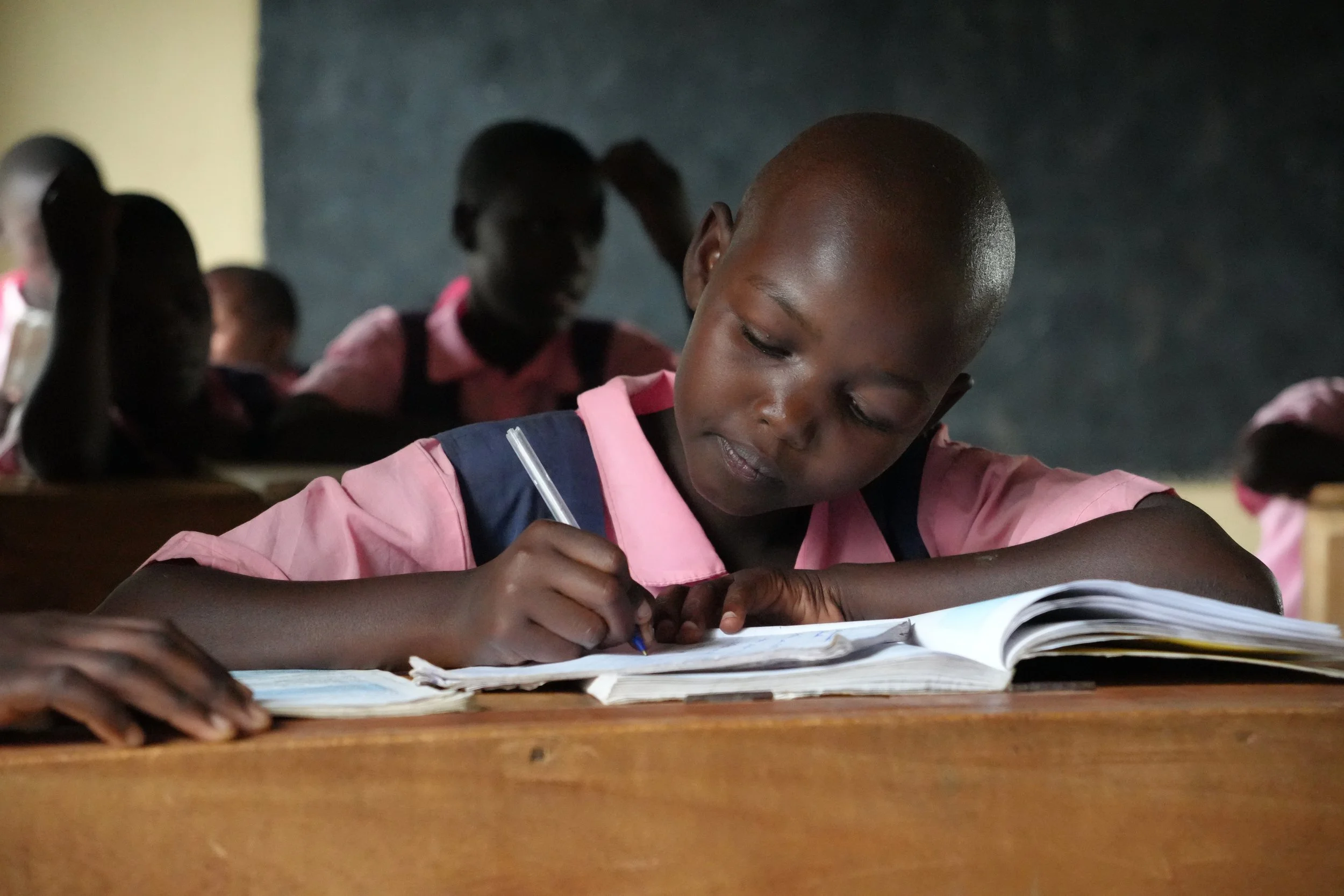
Kenyan Schoolhouse
Kenyan Schoolhouse kids and their teacher © ANPPCAN
The 2021/2022 school year in Kenya has started early to make up for classroom time lost during the pandemic. Suddenly, tuition fees were due at the end of July, rather than September and we have started a campaign to cover the Kenyan Schoolhouse fees, so that our kids can get back to learning. Help us give them a good start to the new academic year. It is life-changing!
See the running total raised here
We’re up to $4524…and counting!
The History
In 2002, Len Morris and U. Roberto (Robin) Romano were shooting in Kenya for the film that would become Stolen Childhoods. Peter Munene, of the African Network for the Prevention and Protection Against Child Abuse and Neglect (ANPPCAN, a bit of a mouthful even as an acronym), brought them to a coffee plantation, where he said they would find children picking the coffee beans. Robin Romano was shooting with a hidden camera, as people are not generally eager to have child laborers filmed.
There were children all over the plantation, climbing, picking, infants napping on the ground. Len noticed a young girl with a very ugly wound on her ankle, a stab from a thorn that had become badly infected. He stopped the shoot. Robin, a lifelong hypochondriac, was traveling with a very impressive first aid kit, and he bound up Sylvie Ngendo's wound.
Next day, Len and Robin returned to the village to check Sylvie's wound. A crowd gathered round, many with wounds and other medical issues. A crew of filmmakers with a first aid kit was the closest thing to a health clinic they had. At the end of that day, they agreed to let Len and Robin come back and film the coffee picking, properly this time. And the crew thought "How expensive could it be to send all of the village children to school?"
That was more than seventeen years ago.
The Kenyan Schoolhouse project has touched the lives of thousands of kids.
Quite a few of them have graduated from university.
To support the education of the Kenyan Schoolhouse kids, click here
To get our quarterly magazine
Join
Would you like to helP?
Donate